
Tech · 1 d ago
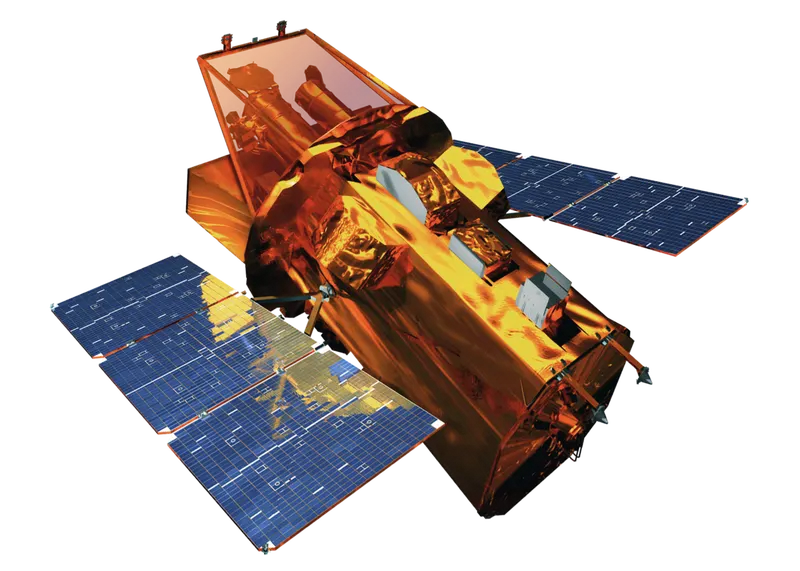
NASA's Swift space telescope is set to fall back to Earth
The Neil Gehrels Swift Observatory will re-enter the atmosphere uncontrolled after a robotic rescue mission failed to lift it higher. Launched in November 2004, it studied gamma-ray bursts, the most powerful explosions in the universe.
Swift's altitude on Oct 20
275 km
On Oct 20, NASA said Swift's orbit had decayed to 275 km above Earth and the roughly 1,500-kilogram observatory could no longer make up for the drag.
What we know
- Its orbit stays near the equator
- The band it crosses is mostly ocean
Not yet
- When it will re-enter
- Where any pieces will land
It is unclear when and where Swift will come down. Its orbit stays within about 21 degrees of the equator, a band that is mostly ocean but crosses populated parts of Africa, Asia and Latin America.
Most of the spacecraft will burn up, and NASA has said harm to anyone on the ground is unlikely. Its six heavy reaction wheels and tougher telescope parts may survive, an aerospace engineer said.